If your due date is getting closer, you’ve probably heard the phrase “Have you packed your hospital bag yet?” more than a few times and for good reason! Having your hospital bag ready around week 36 of pregnancy is a smart move. It gives you peace of mind, reduces stress when labour starts, and ensures you (and your baby) have everything you need for a more comfortable birth experience.
To make life easier, we’ve created the ultimate hospital bag checklist for UK parents — with a free printable at the end of this post you can tick off as you go. Whether you’re having a planned C-section, going through induction, or letting things happen naturally, this list covers it all.
It’s also worth reading this financial checklist for new parents before you begin purchasing essentials for your new arrival.
What You Actually Need in Your Hospital Bag
There’s no need to bring the entire nursery, but you do want to feel prepared. Let’s break it down.
Essentials for You (The Mum Giving Birth)
These are the items you’ll want during labour and immediately after birth.
- Your maternity notes and birth plan – Keep these in an easy-to-reach folder.
- Comfy nightie or oversized t-shirt for labour – Preferably something you don’t mind discarding after.
- Dressing gown & slippers – Hospitals can be chilly and you’ll likely do some pacing.
- Maternity pads (2+ packs) – You’ll go through more than you think, especially in the first few days.
- Big, comfy knickers – Think full-coverage and breathable cotton or disposable options.
- Nursing bras – Even if you’re not breastfeeding, soft support is key.
- Toiletries – Toothbrush, toothpaste, face wipes, deodorant, lip balm (hospitals are dry!), and dry shampoo.
- Hair ties or clips – Essential for comfort during labour.
- Towel (dark colour recommended) – Hospital towels are small and scratchy.
- Snacks & drinks – Think energy bars, isotonic drinks and mints. Partner too!
- Phone charger with a long lead – Plugs can be far from beds.
- Going home outfit – Something loose-fitting, season-appropriate and most importantly, super comfy.
What to Pack for Baby
Your little one will need a few basics from the get-go:
- Nappies – At least 10–12 newborn size (size 0 or 1).
- Cotton wool or water wipes – Hospitals often prefer cotton wool for delicate newborn skin.
- Vests & sleepsuits (4–6 each) – Expect outfit changes for spills or accidents.
- Hat & mittens – Especially important for babies born in cooler months.
- Swaddle or cellular blanket – For warmth and comfort.
- Going home outfit – Something soft and adorable.
- Car seat – Required for discharge, even for taxi rides.

What Partners Should Bring
Many partners forget their own needs in the rush. Here’s what they should consider packing:
- Change of clothes & jumper – Hospital air con can be unpredictable.
- Snacks & water – Labour can be long and tiring for both of you.
- Toiletries – Toothbrush, deodorant, wipes for a freshen-up.
- Phone & charger – For photos, messages, and updates.
- Coins for parking/vending machines – Not all hospitals accept card everywhere.
Bonus: Helpful Extras (Optional, But Worth Considering)
- Earplugs & eye mask – Postnatal wards can be noisy.
- TENS machine – If you’re planning to use one for pain relief.
- Hand sanitiser – Always handy when handling a newborn.
- Birth affirmation cards or calming music – Ideal if you’re creating a relaxed environment.
- Notebook or baby log – To jot down feeds, nappies, and notes during your stay.
When Should I Pack My Hospital Bag?
We recommend packing by week 36, or even earlier if you’ve had a high-risk pregnancy or are expecting twins. Keep the bag by the door or in your car boot if you’re regularly out and about.
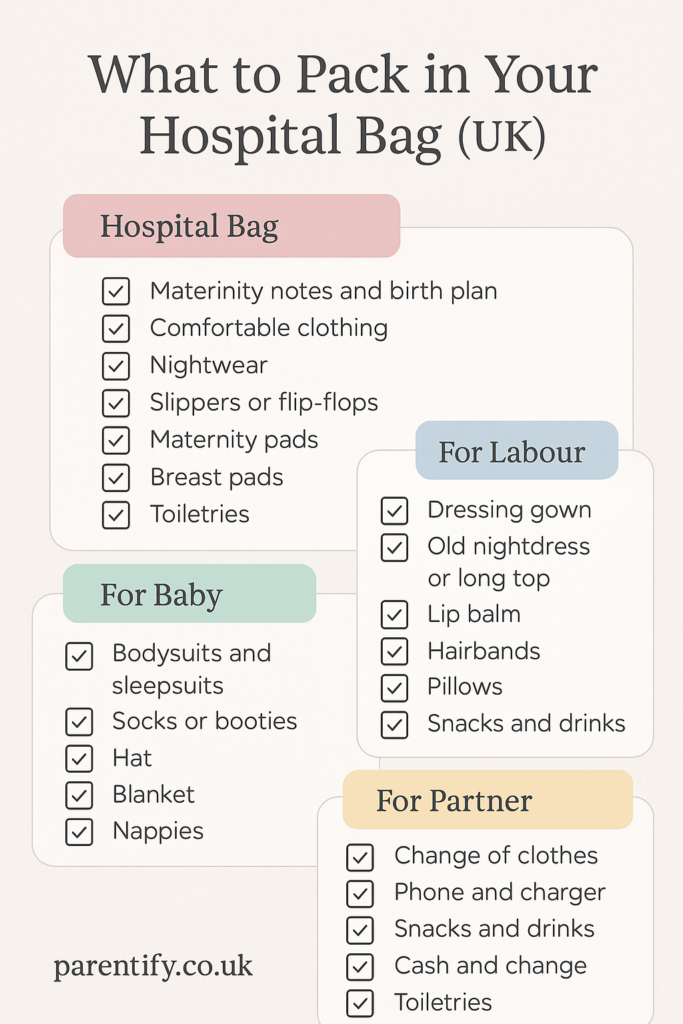
Download your free hospital bag checklist here.
Final Thoughts
Packing your hospital bag can feel overwhelming, especially for first-time parents. But with the right essentials (and a good checklist!), it becomes one less thing to worry about in the final weeks of pregnancy.